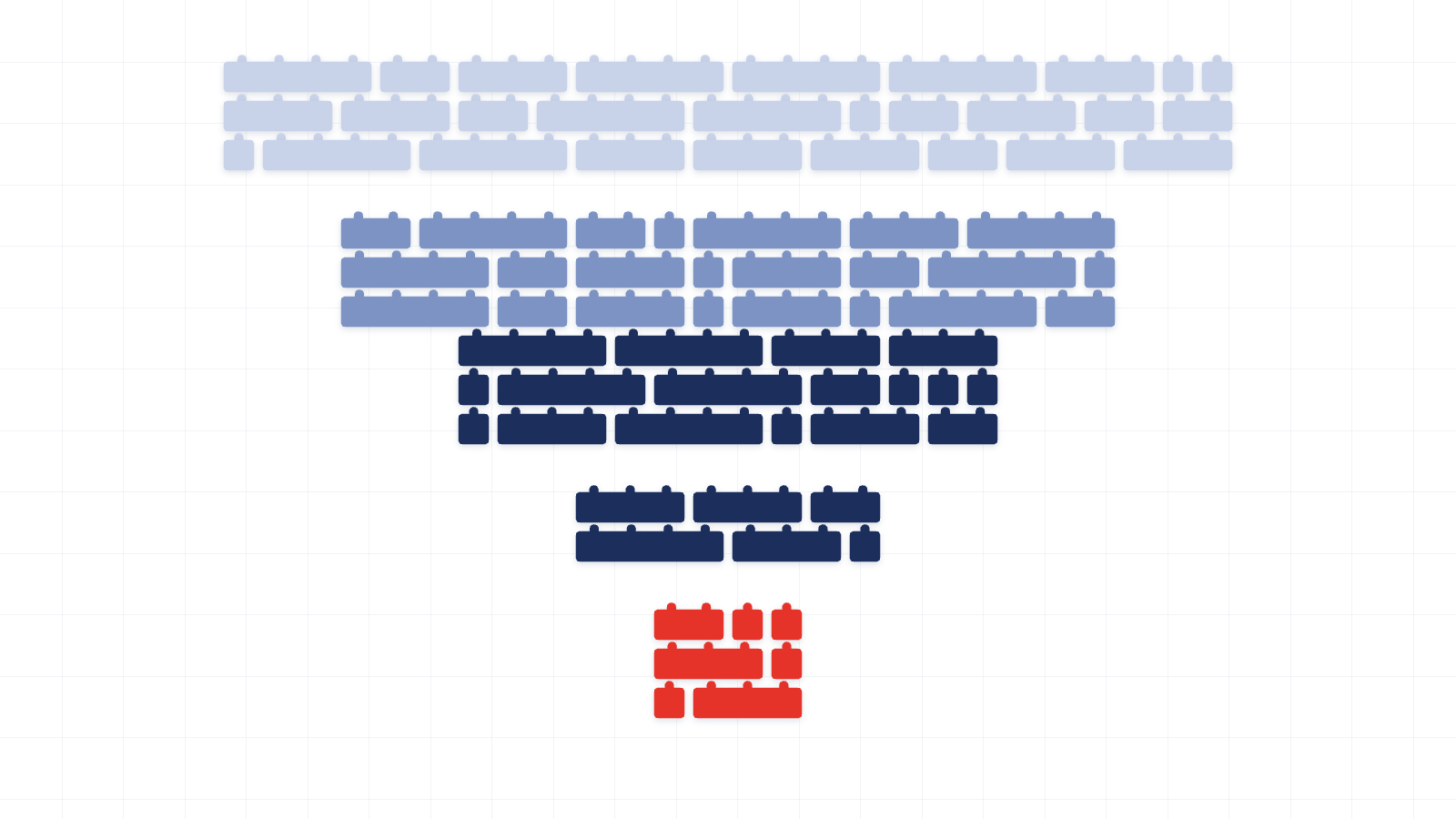
B2B lead generation covers every action a company takes to identify potential business customers and capture their interest or contact details, top of funnel, before qualification or selling even starts. The result is a lead: a contact with interest or ICP fit, but not yet a customer.
Most B2B companies treat this goal as a volume problem anyway: more content, more ad spend, and eventually a spreadsheet with a thousand contacts nobody ever replied to. Lead generation is a question of fit more than volume: who gets approached, about what, and through which channel, before qualification even starts.
In this guide, we break down how inbound and outbound differ, which channels genuinely carry weight in 2026, and how a lead gets handed off cleanly to lead management. How a qualified lead eventually turns into a signed contract is covered in depth in our customer acquisition pillar article.
What Is B2B Lead Generation?
B2B lead generation is the sum of every action that turns an unknown company into a contact with recognizable interest, without that contact needing to be qualified or sales ready yet. It's worth separating this from customer acquisition: customer acquisition covers the entire path from first outreach to signed contract, including qualification, pitch, and close. Lead generation only supplies the raw material for that.
At Scalantec, we see the same mistake play out in practice most often: companies build lead generation and customer acquisition as separate projects, with different owners and no shared definition of when a lead is actually ready for the next step. Without working lead generation, even the best sales team has nothing to do. Without a clean handoff to sales, even the best lead generation goes to waste.
Inbound vs. Outbound Lead Generation in B2B
Inbound and outbound lead generation differ in the direction of first contact: with inbound, the prospect comes to you; with outbound, you go to them.
Inbound lead generation attracts prospects through content, SEO, organic reach, or paid media that brings them to you instead of the other way around. The prospect comes on their own, usually with higher underlying motivation, because they're already researching a specific problem.
Outbound lead generation flips the direction: your company actively identifies matching target contacts and reaches out before they've even started looking for a solution. That means more control over volume and timing, but more effort per contact, since there's no existing interest to draw on.
Most B2B companies that grow predictably run both in parallel. Inbound builds a self reinforcing channel over months. Outbound delivers the pipeline a company needs right now, without waiting for content or SEO to ramp up.
The Most Important B2B Lead Generation Channels
Content & SEO
Content and SEO are the cheapest lead generation channel in the long run: once an article or page ranks, leads keep coming in without ongoing cost per contact. The downside is ramp up time, usually several months before a topic builds any real visibility. Companies that take this channel seriously work in topic clusters instead of standalone articles: one pillar page per core topic, surrounded by supporting articles that link to each other and build authority for the topic together. This guide itself is built on exactly that principle.
A growing share of search queries today gets answered not through a results page but through AI assistants like ChatGPT or Perplexity. Content that works for search engines and these answer engines alike is becoming its own part of a lead generation strategy, not a footnote to it.
Paid (LinkedIn Ads, Google Ads)
LinkedIn Ads and Google Ads buy visibility that would otherwise take time to earn organically. LinkedIn Ads allow very precise targeting by industry, company size, and role, matching a defined ICP directly. Google Ads capture search intent in real time instead: users actively looking for a solution rather than needing to be convinced first. Both channels scale fast, but also get expensive fast once competition for a keyword or audience rises. Paid works best when it accelerates a channel that's already validated, not when it's asked to substitute for ICP work that's actually still missing.
Outbound (brief note)
Outbound channels like cold email, cold calling, and LinkedIn outreach generate leads by actively initiating contact instead of waiting for inbound interest. The execution details, sequence design, personalization, and real campaign data are covered in depth in our customer acquisition pillar. Outbound remains one of several lead sources, on equal footing with content, paid, and events.
Events & Community
Events, conferences, webinars, and communities generate leads through direct human contact instead of content or ads. One example from our own practice is Clay Club Berlin, a community built on genuine professional exchange rather than lead capture forms. This channel is harder to scale and harder to measure than content or paid, but it often produces the highest quality leads, because trust already exists before the first sales conversation.
From Lead to Qualified Lead: Handoff to Lead Management
Lead management is the process that turns a raw lead into a Sales Qualified Lead that sales should actually work. Lead scoring and lead nurturing turn a raw contact into a Marketing Qualified Lead (MQL) first, and in the next step a Sales Qualified Lead (SQL). This handoff is exactly where most leads get lost in many B2B companies: unclear criteria, no feedback loop to marketing, leads that simply sit until the interest cools off.
Lead scoring typically weighs two dimensions together: does the contact fit the ICP firmographically (industry, size, role), and does their behavior show genuine interest (content consumption, repeat site visits, response to outreach). Only once both line up does the handoff to sales actually pay off.
How lead scoring and lead nurturing get built in practice, and which software supports it, is covered in depth in our Lead Nurturing & Lead Scoring article, and our Lead Management Software article.
Common Mistakes in B2B Lead Generation
- Optimizing for volume instead of ICP fit. The lead numbers look good in the report, but conversion further down the funnel still collapses
- A single channel instead of a coordinated mix of content, outbound, paid, and events
- No clear handoff to sales. Leads disappear between marketing and sales because nobody is clearly accountable
- Content that only serves early funnel stages while the CTA already asks for a meeting
- No feedback loop from sales, so which leads actually turned into customers never flows back into channel decisions
Frequently Asked Questions About B2B Lead Generation
What's the difference between lead generation and customer acquisition?
Lead generation creates contacts and interest, top of funnel. Customer acquisition covers the entire path from first outreach to signed contract. Lead generation is one part of that, not the whole thing.
Which channel works best for B2B lead generation?
There's no universally best channel. Content and SEO deliver cheap, predictable leads over time. Outbound delivers pipeline you can control in the short term. Paid accelerates whatever is already proven to work. The strongest results come from a combination, matched to your ICP and sales cycle.
How many leads does a B2B company need per month?
That depends on conversion rates across the funnel and your revenue target, not a blanket number. A realistic benchmark only emerges once you know your own lead to opportunity and opportunity to customer rates.
What does professional B2B lead generation cost?
It depends heavily on the channel mix. Content and SEO carry a high upfront investment and low ongoing cost per lead. Paid and outbound have lower upfront costs but ongoing cost per contact or click.
Should we build lead generation in house or outsource it?
Both can work. In our experience at Scalantec, outsourcing pays off most once the ICP is already clear and only execution is missing. Without a clear ICP, outsourcing just buys you faster wrong spend.
Building B2B Lead Generation as a System
Lead generation that scales comes from a system rather than from more content or ad spend. It is built on a clearly defined ICP, a coordinated channel mix, and a clean handoff to lead management and sales. At Scalantec, this is exactly what we build: ICP precise channel systems instead of contact lists. If you want to build your lead generation systematically instead of leaving it to chance, talk to our team.
How would this work in your team?
In a free 30-minute call we look at what it would look like on your stack.

Nicolas Schell is co-founder and CEO of Scalantec. Before Scalantec he worked at McKinsey and Celonis. Today he and his team build outbound and RevOps systems for B2B companies, and he organizes Clay Club Berlin.